Crystal Light Lab.
Change the view and watch what happens to the colour. Use stills and short clips from our videos alongside photographs from the collection.
Compare Labradorite flash and Moonstone sheen →Colour flash
Labradorite
Labradorescence is the flash of colour you can see from certain angles in labradorite. As the broad face turns towards the camera, blue comes into view.
Follow the dark lines across the face as you change views. Check how the patch of colour and the narrow white reflection behave as the stone turns.
Watch this moment on YouTube (opens in a new tab)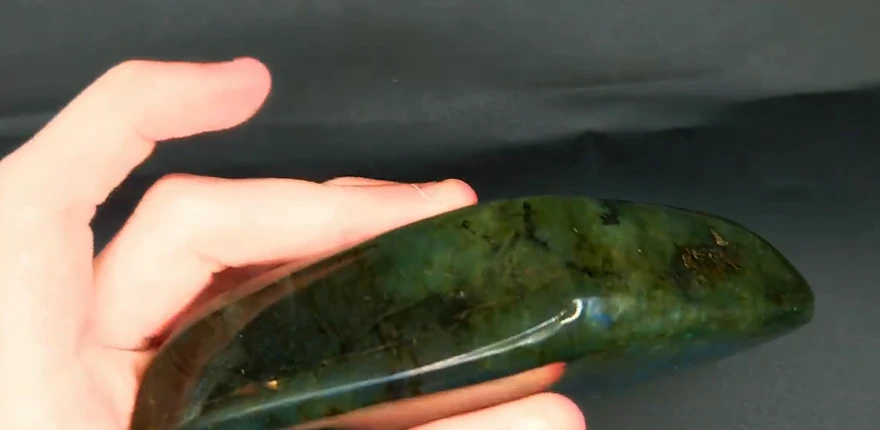
View our Labradorite collection photo

Separate photograph from our collection.
Read the numbered photo observationsMoving sheen
Moonstone
The drifting sheen associated with moonstone is called adularescence. Watch for the small blue patch in the stone shown in our Moonstone Short.
Pick out one dark mark and use it as a reference point. See where the blue patch brightens as the pale face turns.
Watch this moment on YouTube (opens in a new tab)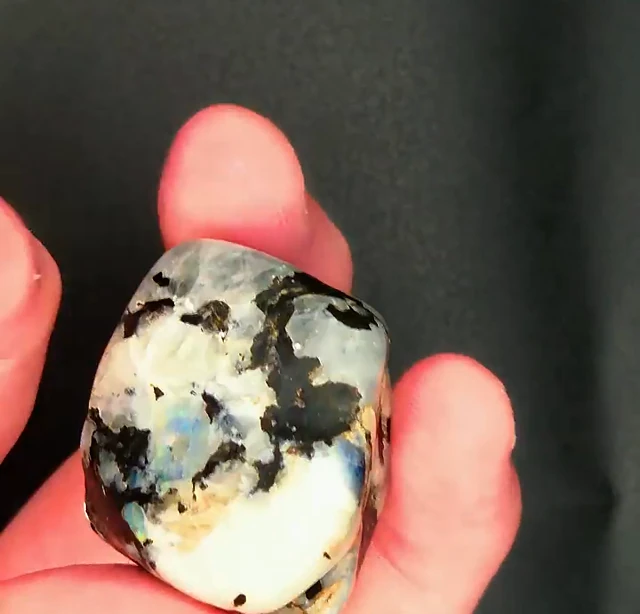
View our Moonstone collection photo

Separate photograph from our collection.
Read the numbered photo observationsUV fluorescence
Volcano Agate
Look for bright green patches in the UV-lit stone. Visible light emitted under UV is called fluorescence.
Both views were filmed under UV. As the specimen turns, look for the green patch, the thin lines and the darker areas next to it.
Watch this moment on YouTube (opens in a new tab)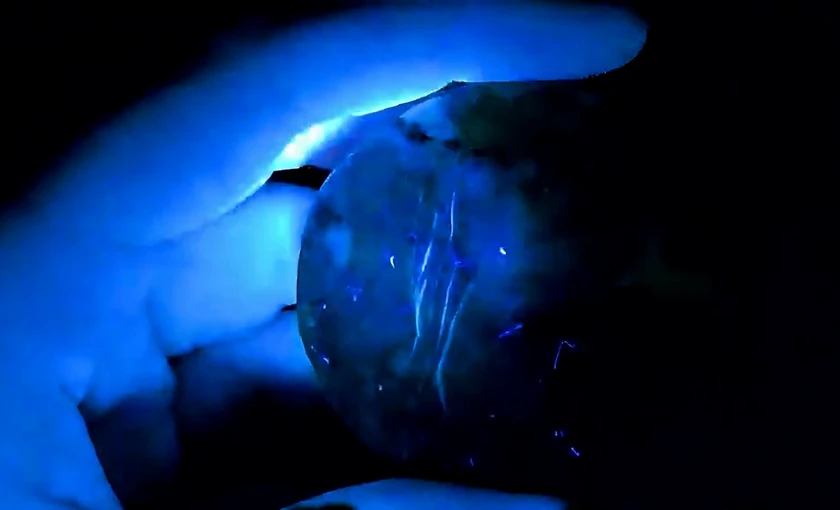
View our Volcano Agate collection photo

Separate collection photograph under UV.
Read the numbered photo observations