Video companion · About 3 minutes to read

Carnelian: look at the colour, then follow the carving story

Pause on two different Carnelian examples from our video. Compare the softer reddish tones of the piece held in hand with the brighter orange of the polished example, then follow the story of carved carnelian to a documented museum object.

Watch on YouTube (opens in a new tab)

Original video · 5:03
Carnelian: Everything You Need to Know About This Ancient Gem

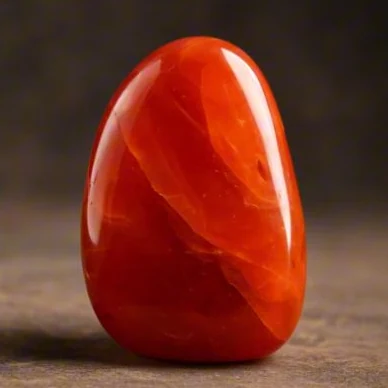
A polished red-orange stone upright with curved orange lines and bright edge reflections
Still from our YouTube video at 1:10.

What to notice as you watch

The episode covers traditional associations and mineral history. Read the documented example below when you reach the section on carved rings.

Select a time to open that moment on YouTube.

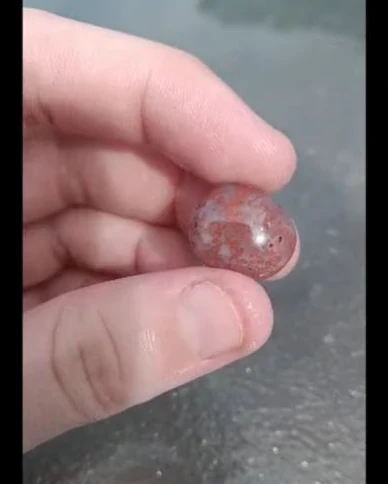
  1. A small rounded pink-red stone with fine cloudy flecks held between fingers0:55 · See the piece held in hand (opens in a new tab)

    The narration explains the link between carnelian, chalcedony and quartz. Look for the cloudy reddish areas and a bright spot reflecting from the rounded surface.

  2. A polished red-orange stone upright with curved orange lines and bright edge reflections1:10 · Compare the polished example (opens in a new tab)

    Find the bright streak at the edge and the orange lines that run through the body. With a piece of your own, move the light slightly and observe which bright areas shift.

  3. 2:15 · Hear about carved rings (opens in a new tab)

    The narration turns to Roman signet rings. Open The Met’s catalogue reference below to see the recorded material and date of an actual Roman ring.

01 · Look a little closer

Use the quartz family to make sense of the name.

Carnelian is orange to reddish chalcedony, a fine-grained form of quartz. Iron compounds contribute the orange and red colour. Two pieces carrying the same name can look very different in a photograph, particularly if they are different thicknesses or were photographed under different lighting.

Describe a colour patch, a reflection and how much light passes through the visible edge as three separate notes. An ordinary white background and a steady lamp give you a more repeatable comparison. Leave the origin and treatment history open until you have supporting information.

02 · Look a little closer

Follow the carving story to a recorded object.

The Metropolitan Museum of Art catalogues a Roman silver ring with a carnelian intaglio, dated to the first or second century CE. Intaglio describes a design cut below the surface. In the catalogue entry, the date, material and object number make the identification traceable.

Borrow that approach for your own collection. Record the material written on the label, where the information came from and which parts you observed directly. Keep the condition and finish on the same record when you consider how to clean or display it.

Pause. Replay. Describe.

Try this while watching

  1. Pause at 0:55 and 1:10. Record one reddish area and one bright surface reflection in each view.
  2. If you have a similar piece, use a steady lamp to check whether the bright spot moves as you turn it.
  3. Open the museum entry and find the material and date fields. Use those as prompts for your own record.

Sources and further reading

Written for Rock & Crystal Secrets. Video narration and mineral references checked 20 November 2026. This is an original reading companion, not a transcript or a laboratory identification.
More video guides

Find a moment to pause, see what to look for and follow the matching mineral or collecting guide.

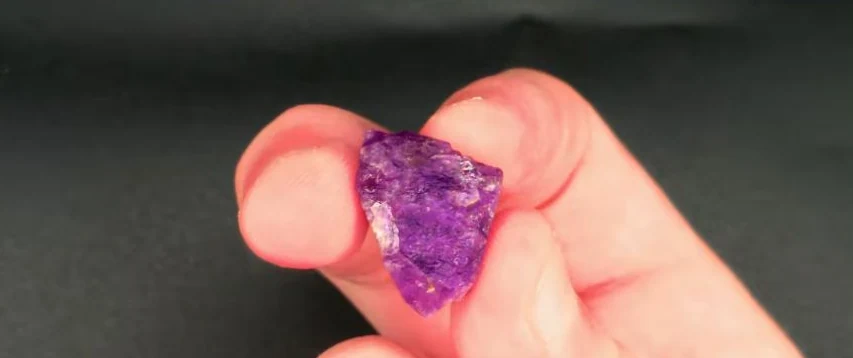
A small rough purple stone pinched between two fingers

Your first crystals: four details to look for

Pause on Amethyst, Rose Quartz, Clear Quartz and Obsidian, then use the details you see to start a specimen record.

Read the video guide →
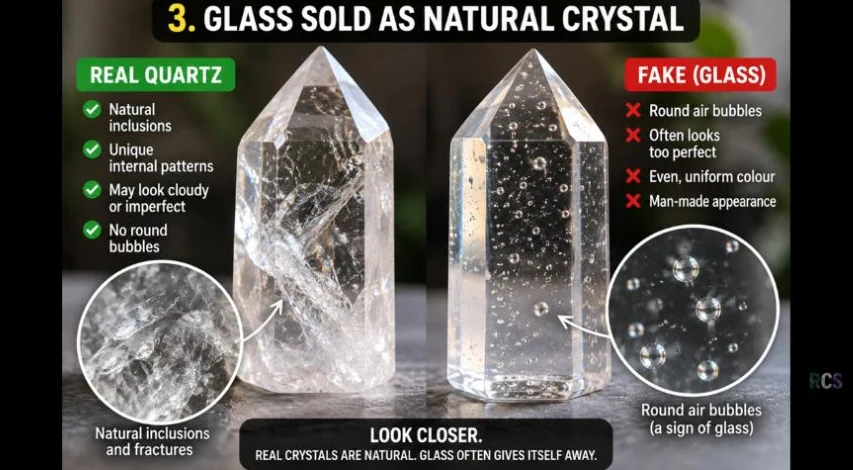
Two clear points on a comparison slide with enlarged internal details shown in circles

Five crystal-buying clues to check before you buy

Watch the examples of dye, heat, glass, assembled stones and coatings. Turn each clue into a question for the seller.

Read the video guide →
Amethyst collection photograph

Amethyst explained: purple quartz, heat and care

Explore the science behind our Amethyst video, clarify the heat-treatment story and learn how to care for your specimen.

Read the video guide →
Citrine collection photograph

Is your citrine natural or heat-treated?

Watch our Citrine Short, examine the colour clues and learn what to ask before buying a specimen.

Read the video guide →
Labradorite collection photograph

Why labradorite flashes as it moves

Follow the changing colour, learn about labradorescence and keep observations separate from symbolic meanings.

Read the video guide →
Volcano Agate collection specimen under UV illumination

Volcano Agate under UV: what the glow tells us

Read the UV reveal carefully, understand fluorescence and learn what a trade name or glowing patch cannot prove.

Read the video guide →
Moonstone collection photograph

Moonstone’s blue flash, explained

Explore the Short’s light effect, practise describing a moving sheen and understand the limits of a moonstone label.

Read the video guide →
← Browse all featured videos